Sardinia I

6.03.2012

Agriturismo. The word itself, like so many others of its Italian brethren, just sounds inviting. It's a word I hadn't heard before coming to Europe a few years ago, but it turns out it's the way to see Italy anytime you're outside the major cities. Part agriculture (you stay on a real farm or in farm-ish surroundings), part tourism, it's essentially a much cooler-sounding way of saying 'bed and breakfast'.

And so it was that I embarked on my first agriturismo experience to spend time on Sardinia, a large island west of Rome and mainland Italy in the Tyrrhenian Sea.

Oh, and it is also part of paradise. We knew we were on to something when we bought a map at the airport, and it listed over 500 beaches. But more on the beaches in the next post - for now we'll focus on the agriturismo part.

An Internet search months before landed us at l'Aglientu, a cozy agriturismo located about 15 minutes by car from Olbia, one of the larger cities on the island. It provides a nice bit of confidence for such a new experience when the owner of the place replies to your e-mail within the hour of your inquiry - Antonella at l'Aglientu did just that.

It was a perfect launching point for daily excursions to all other points on the northern part of the island (The south and west of the island was a bit far for our tastes, and with beaches everywhere nearby, the idea of spending some prime sun hours in a car held little appeal).

The rustic rooms were spacious, and clean the grounds were situated in postcard-perfect countryside (complete with chickens, wildflowers, and a family of basset hounds) and every morning breakfast was waiting in the outdoor nook.

And cheap! At not quite high season, 70 Euros a night for a better-than-hotel experience was a nice treat. Basically, it's exactly the kind of place that makes us northerners start fantasizing about selling all our worldly goods and starting up a small B&B, er, agriturismo of our own.


Breakfast waiting each morning 

Picked up some items during the day for an impromptu happy hour


Me and Chi

5.20.2012

Signs a North American might be assimilating to a European lifestyle:

  • You first reject, then accept, then regularly seek out, mouldy cheese.
  • Your suits get slimmer.
  • Your love handles do not.
  • Your bathing suit shrinks - not to Speedo-level, mind you, but to at least half the size of the tent-like Abercrombie shorts previously favoured by you and most of your old countrymen.
  • You have not eaten a meal in a car for at least 3 years.
  • You see approximately 92% fewer fake breasts (but who's counting?).
  • You have bought a scooter.

Enter Mister Chi


Mister Chi is the scooter shop in Amsterdam was where I took the plunge and bought this motorized marvel, to help get into town much quicker. They are Chinese-made scooters, as cool (some would say cooler) than the Vespa at about half the price too. They're quiet too, for those of us who like to remain polite Canadians.

I guess the immersion into Europe just became a little more immersive. They are allowed on bike paths, it costs five euros for a full tank of gas, and parking pretty much anywhere is free and easy; it all just made sense.

I live about a 30-minute bike ride to the city center, which is great for fitness but it can be a huge hassle when the wind is blowing in my face (when isn't it?) or I need to get farther (on the bike, it's close to 45-60 minutes to reach friends living on the opposite side of the city).


You can also rent a scooter at Mister Chi to check out Amsterdam. It's a sweet way to get around the city, especially if you want to check out things happening outside the center and want to get around quickly. It's way cheaper than a single taxi ride and about 100% more enjoyable.

The Downsides

5.18.2012


The final installment of a four-part series on being an expat

Time for a Change | The Favourites | The Differences | The Downsides

The final part of this expat exploration admittedly is a bit of a downer. Then again, the title is "The Downsides". They are, from my vantage point, still far fewer in number than the upsides, so you can expect much more of latter in future posts.

Lost in Translation

As far as foreign places go where a native English speaker can set up camp and get by in his/her own language, the Netherlands is head and shoulders above much of the world, and not just in a physical sense. The Dutch have the second-highest proficiency among non-native countries in terms of English skills.

Still, the expat can occasionally wade into all kinds of difficulties. I experienced it just the other day, rather severely, where in my mostly decent Dutch I told the guy cutting my hair "Not too short please, just something nice for my upcoming wedding." I obviously got it wrong by a word or two though. Yikes. I looked like Jim Carrey in Dumb and Dumber.


The Home Town Advantage

It's likely that there are variations of it in almost every country, whereby the locals enjoy a cheaper cost of living than do visitors. As they should. Still, here in Amsterdam at least, the difference feels acute. The red light district is not the only place where expats pay to get screwed. 

It's very likely that, in a given workplace, the expat will be paying 1250 EUR for an apartment that the local Dutch native will be paying 500 EUR for. This is because many Dutch are eligible for subsidized housing, entering the rental market at a very low rate and then keeping it out of the sights of regulators, who would prefer that as income rises, eligibility to receive subsidies wanes. 

This means expats, partly out of ignorance but mostly out of the years in waiting list time to receive this government goodie, pay often two to three times more in rent. Many landlords are aware of this, with ads saying "Expats Only".

Schooling is also an issue, with foreign students paying many times more in fees than locals. This I can understand - the Dutch families that have been paying tax into the system since little Jip or Janneke was an embryo deserve to be paying less than the outsider who just arrived. Most countries do this, I believe, so no harm here, except to the wallet.

Missing Persons

Far and away the biggest problem with being an expat is the absence of good friends. Good old friends, I should say, because there are definitely some good new ones to be found.

Still, I've noticed often over the past few years that new friendships lack the foundation that cements old friendships. With their anchors in shallow, sandy water here in Amsterdam, new friendships often drift down the canal at the sign of the first ripple or strong wind. They haven't had the time to develop the strong base that old friendships have, a base formed by years of laughs, tears, life in general. Too many times - and I am equally at fault - people just fade away here.

A shared cultural background is also often missing abroad - it's not something I ever considered before I came, but not being able to reference a key Saturday Night Live clip or share a piece of lamentation pie over the demise of the Montreal Expos can sometimes be a sad thing, strangely enough. 

It doesn't get much easier. I regularly bike past any number of lively cafes and see a group of guys having a beer and a laugh together and I feel a real jolt of sadness. I once heard a saying along the lines of "you can't make new old friends". Corny, maybe, but spot-on. This was reinforced over the past week, with some great friends in town. With their recent return to Canada again, missing from these streets and pubs, the void is palpable.

Delayed Culture Shock

This one caught me off-guard. I anticipated culture shock upon first arriving, with different unspoken cultural norms, strange foods, and the mystifying ways of foreign women. Turns out that was all kind of a breeze (holla). For anything that one might think of as "strange", I was able to chalk it up to exciting newness and a new way of looking at things.

But now, being no longer really a tourist and having immersed myself in the cultural fabric - a neighbourhood for more than 6 months, a job, the requisite government red tape - the shock has been like a time-release vitamin. In some cases, this has been a tough pill to swallow.

Things begin to grate after a while, as they can no longer be considered just quirky or new. I've been scolded by a number of retailers or service people too many times - me, the customer, the one with the money and the option to take my business elsewhere. I've met mulish stubbornness combined with arrogance on a level I've never seen. My oft-documented hatred of shrieking Dutch children has not diminished. Bumbling or just plain poor service has not improved (seriously - how hard is it to hold the onions?). I won't say too much because A) I have met some great Dutch friends and colleagues and B) every country has its warts that can only be seen after a few years - but the shock effect is real.

5.14.2012

New posts coming this week - Sardinia, Holland, Expat Life and more! Ok, not more, but still!

Vive Les Differences

3.31.2012

The third of a four-part series on being an expat

Time for a Change | The Favourites | The Differences | The Downsides

Some differences grow wider as the expat life is prolonged. What seem at first like small cracks and tiny charms become bigger potholes of annoyance; on the other hand, some items that make you scratch your head actually begin to make sense as you assimilate.

I'll speak mostly of the life in Amsterdam, seeing as how it's where I've been the majority of the time since leaving my homeland. And of course Canada, where I spent the previous 3+ decades. And while a country of 30 million and a city of 700,000 can never be reduced to just a few generalizations - there are exceptions to everything - here goes. Let's dispense with the world's most over-talked-about topic first:

THE WEATHER

In Canada, there were times every winter when the temperature hit minus-30 that I would growl and shake my head, plugging in my car and swearing "we humans were not meant to live like this"

In Amsterdam, there are times where the sun doesn't come out for weeks and the rain and gloom make me growl and shake my head, unlocking my bike and swearing "we humans were not meant to live like this"

CONVENIENCE

In Canada, as in most of western civilization, stores and pharmacies are open after 6pm.

In Amsterdam, as in much of nowhere else, most stores pharmacies close at 6pm. While getting home to his/her family for dinner no doubt enhances the pharmacist's quality of life, it does little for mine. While it only occasionally inconveniences me now, I can imagine how much it will suck if and when I have a baby, and am on occasion reduced to using a tea towel as a diaper (for the baby, I mean).

PEOPLE

In Canada, the emphasis is on home life and you have the space to make it happen. This, coupled with the need to drive every day and everywhere, does little for street life and energy.

In Amsterdam, the average apartment is pretty tiny and often home to unwanted roommates like mice. This, coupled with a bike-friendly culture and neighbourhood shops, does create an environment for seeing hundreds and thousands of people on a weekly basis - in pubs, on the streets, in cafes.

BATHROOMS

In Canada, your bathroom is often quite spacious and accommodates your need to sometimes spend some quality time there.

In Amsterdam, the toilet is located in insanely small quarters. These amount to little more than poo closets*, and your head can even be touching the door at times. No loitering here, people - do your business and move on. Claustrophobics must literally s**t themselves.

AMBIENCE

In Canada, ...

In Amsterdam, it's everywhere. On weekends in my old apartment, I would hear accordion music wafting in the windows while at night. Candles light up the windows of homes and cafes every night, and even the exteriors of many buildings are lit up thougtfully.

BEER and WINE

In Canada, you'll find a decent bottle of wine for $10 and a case of 24 beers will set you back around $18. But then you don't have to beg for a glass of water and can use bathrooms for free.

In Amsterdam, the same decent wine will cost you $5 and 24 beers can get as low as $10. But water is scarce in most establishments, and the mind-boggling practice of charging clients for use of the bathroom is commonplace.

CULTURE

In Canada, cultural pockets do exist. But when non-Canadian friends ask what's typically indicative of Canadian art, cultural traits, and food, I really need to search before sheepishly mumbling something about Inuit carvings, politeness, and maple syrup. None of which are bad, mind you - they just seem to lack a little pizzazz.

In Amsterdam, as in all of Europe, locals can point to very real, and very beautiful/cool/tasty cultural norms and identities. The area of De Pijp in Amsterdam, just as one example, has full paintings on the exterior of some buildings to showcase the art of the person for whom the street is named. Paris, Barcelona, Rome, etc. all fairly drip history and cultural and culinary richness.

*Yes, I will likely regret having written "poo closets" at some point in the future. But for now it seems to fit.

Almost There

3.26.2012

As a cocktail of extreme busyness, mild writer's block, and a big life event coming up soon, this blog has taken a back seat and I do apologize. The good news is that there are some drafts already drafting, some posts almost posting.

For now, have a look at one of the best pieces describing life in Amsterdam I've ever read. It leaves out the copious amounts of rain and lousy service, but otherwise it's spot on.

I took the big photo atop this page on a brilliant early spring day two weeks ago, and these guys and their dogs would fit well into this article:


Must

2.21.2012

Must... blog.. again... soon.. I know... soon, soon...

1.29.2012

Spain's Costa Brava, 90 minutes north of Barcelona. Muy agradable


Time for a Change | The Favourites - final (for now) | The Differences | The Downsides

Wrapping up the Favourites section of the four-part Expat series, here are some images that convey some of the richness of Europe, all within a few hours' flying from Amsterdam.

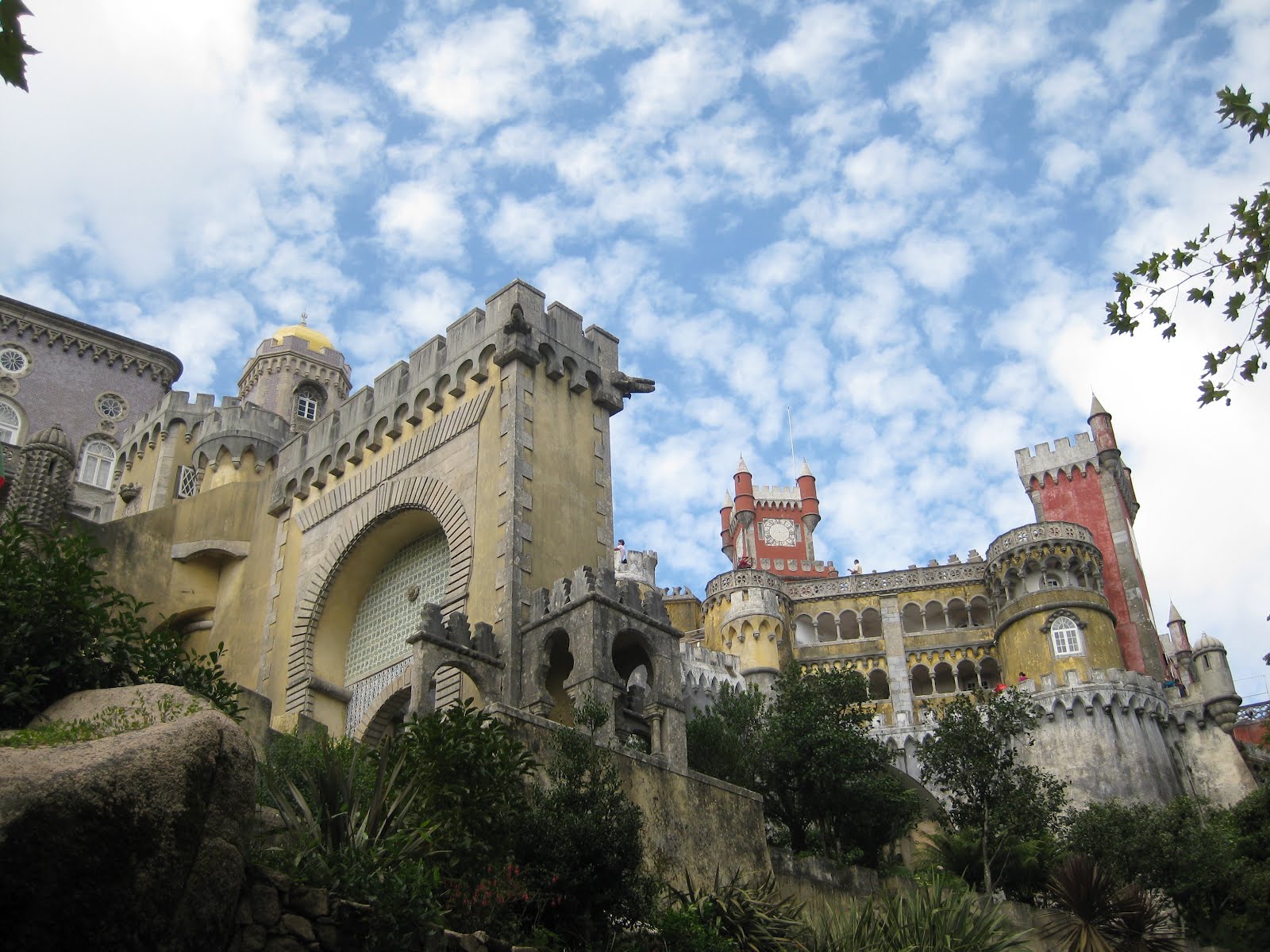
Above - Sintra, Portugal - just your random, everyday medieval castle in the sky. Amazing.

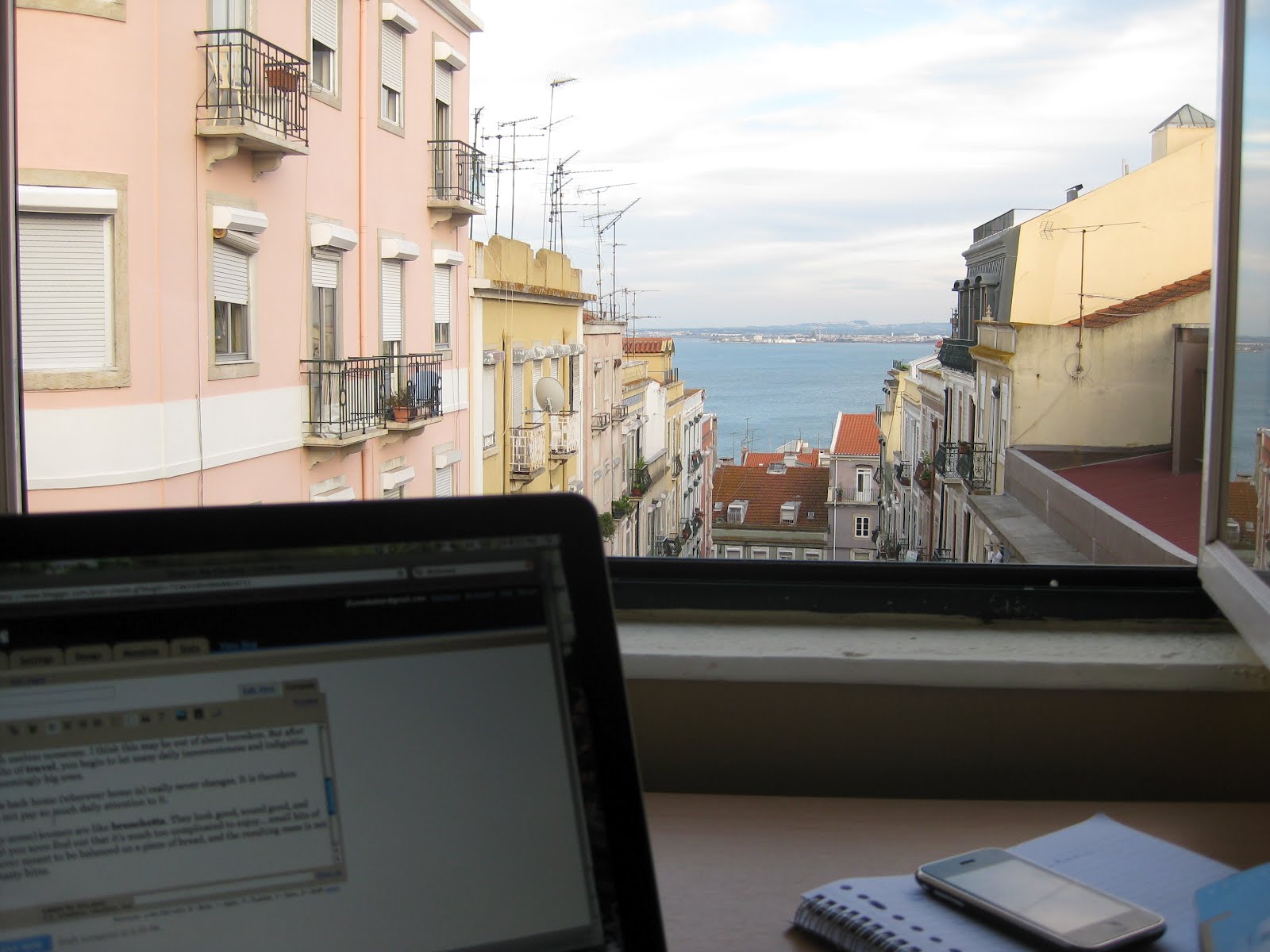
Below - Lisbon, Portugal - the view from a room where I lived for month (the city, not just the room). Lisbon (and really, all of Portugal) is too often overlooked as its bigger neighbours get all the attention. Nice people, fantastic climate, laid-back life - it needs to be doing better than it is.
Above and Below - Peniche, Portugal - Home base of the Baleal Surf Camp. A great place to channel your inner Bodhi, but you don't need to rob banks to live here.


Below - Amsterdam's VondelPark (again). I'm not sure if Europeans invented the urban park, but they sure have perfected it. Places like this exist all over each major city I've been to in the past three years - a welcome break from the busy streets.


Below - Domburg, Netherlands. A few hours south of Amsterdam, this town is a surprise for anyone, expat or local, who is accustomed to the crowded houses and busy streets of the bigger Dutch cities. Miles and miles of coastline (why does kilometers and kilometers sound strange? anyway...) and sandy beaches can be found here, all ringed by dunes and then the town itself, which is full of classic pubs, pastry and gifts shops, and lekker restaurants with a Belgian influence.

Below (2) - Provence region, France. Read Peter Mayle's "A Year in Provence" - it's like a vacation in paper form. And it describes this fantastique part of the world more eloquently than I can.


Above - Silute, Lithuania - The woods here on a sunny late winter day were perfectly lit and peaceful. Lithuania has many small towns like this, along with some beach towns that I will update you on at some point in the next year or so.

Above - OK, I snuck in one more Paris photo. Couldn't help it. The addiction is permanent.


1.22.2012


Time for a Change | The Favourites - continued | The Differences | The Downsides

Part 2 of a 4-part series on being an expat

Istanbul, Berlin, Barcelona, Paris, London, Provence... all places that held an exotic, if remote, place in my brain before leaving Canada. Add in Lisbon, Lithuania and Malaga - respectively, two places I never thought I'd see and a place I'd never heard of, and, well, I've been very fortunate. More photos to come later this week.

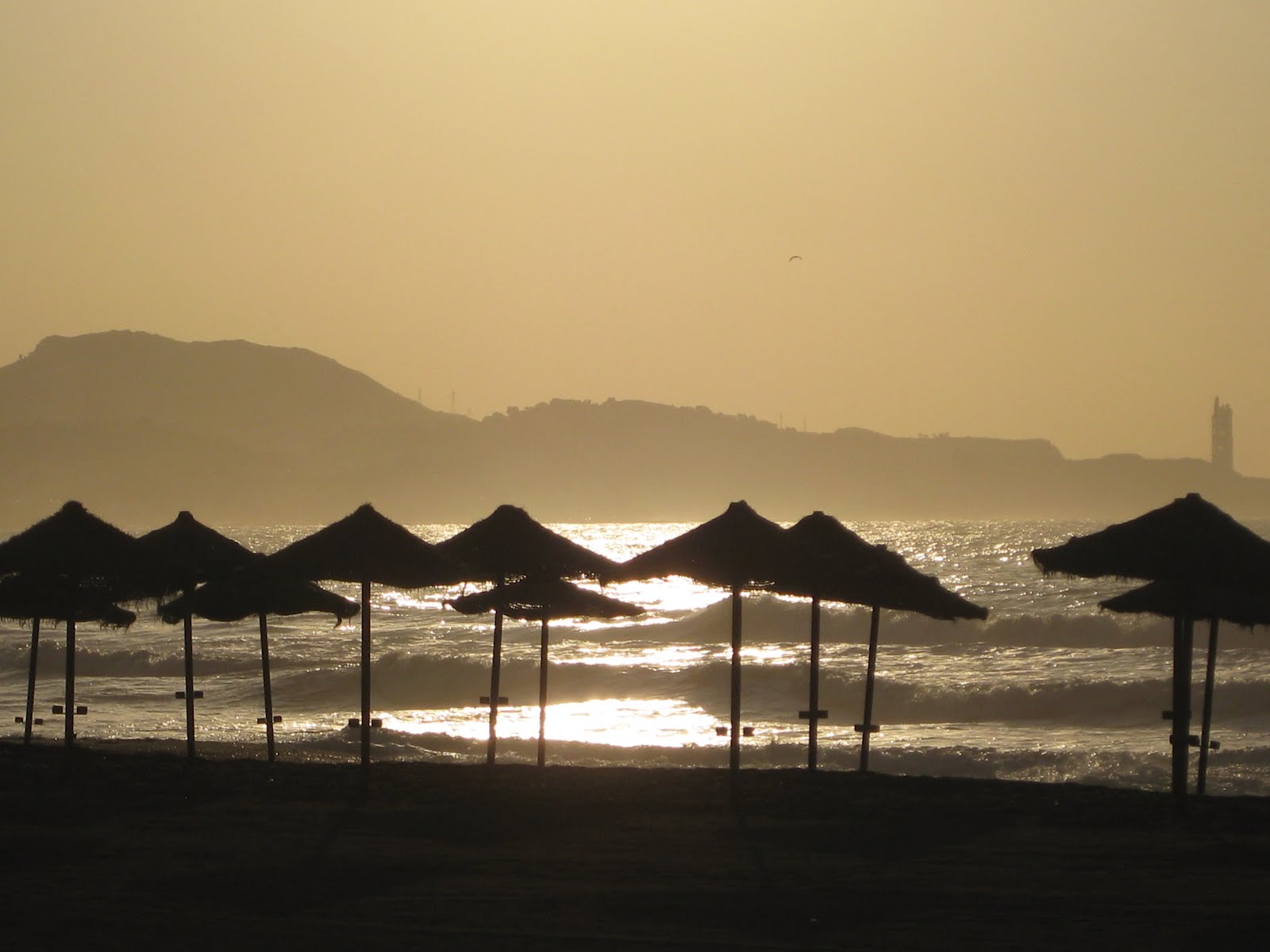
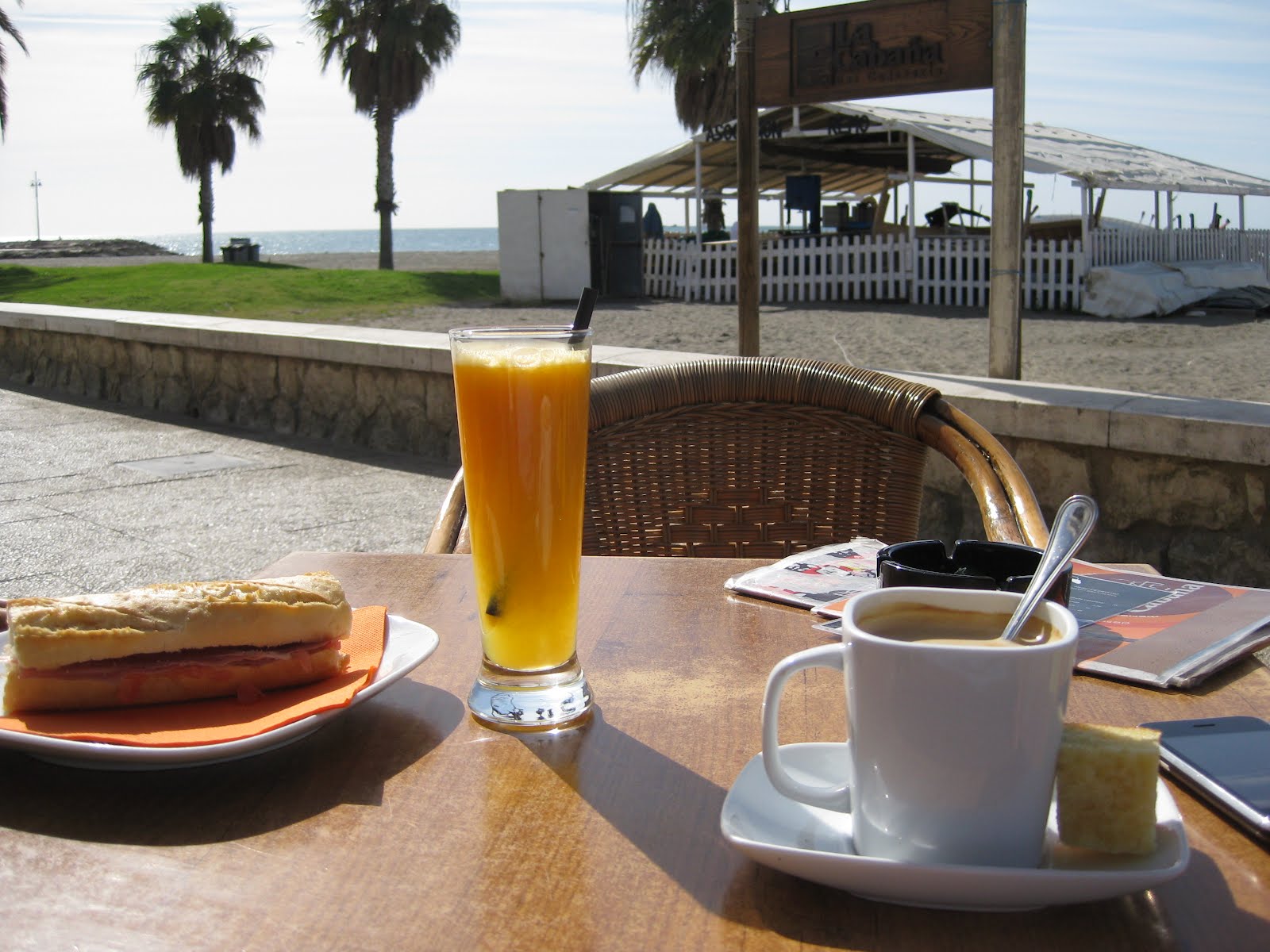
Above - within minutes of arriving for the first time in Malaga, a place I had honestly (shamefully) never heard prior to four months before arriving. A late afternoon in March brought with it a warm sun, beer, and pure simplicity. And it's become an all-time favourite and somehow a place where I will end up, sometime.

Below (2) - more Malaga, more simple perfection.


Above - a favourite piece of art from the Musee d'Orsay in Paris. Europe fulfills every cliché in the book, in the best way. You breathe in more culture here, and appreciate the finer things. There's a lot going on in this painting, as a young man goes off to war.

Above - Amsterdam's Leidsestraat. A burst of sun every 2-3 weeks or so seems to serve like a massive magical eraser for the wintry gloom. Ditto below, in London's Kensington Gardens.


Below (2) - Barcelona's La Boqueira market and a Gaudi building. If northern Europe is all to grey and muffled in the winter, Barcelona (and Spain in general) is the antidote - full of colour and energy.


Below - April in Amsterdam. No one shakes off a long dark winter like Amsterdammers, and the plants and birds are in on it too.


Istanbul (3) - on the Galatea Bridge at sunset, and more. Amazing history in this city... but, with the tourist trap feel and constant hustle, overall it seems somehow better suited for the camera than the soul.


The Favourites

1.11.2012


Time for a Change | The Favourites | The Differences | The Downsides

Part 2 of a 4-part series on being an expat

So this is perhaps a little like a holiday-time clip show, where the writers take a break and run their favourite episodes of the past year. But some sunshine is in order, no?

I caught myself wistfully looking at photos from the past 2 years of travels and realized that there is no way I would ever have seen even half of these places if not for taking the initial big leap and leaving my old nest consisting of equal parts comfort and deep dissatisfaction. I still hope that at least one person who checks out this blog is inspired to do the same if they're stagnating or seriously bummed.

So here goes - places, moments that have left a permanently pleasant imprint on my brain since leaving Calgary in late 2009:


Above - U2 in New York at Giants Stadium, September 2009... Bono's voice has gotten pretty un-Bonoish, but still it's quite something to share a peaceful evening with 70,000 people and your oldest friend (not Bono, but a guy named Jason).

Below - The Jardin du Luxembourg in Paris. It was walking here for the first time in July of '08 that I first knew my days back home were numbered; that there is such richness and beauty and culture to discover (these photos are from a subsequent visit) October. I kinda want to make a joke here to make this sound less sappy, but, well.


Below - Vondelpark in Amsterdam, the city's version of Central Park. Essentially, it's the main artery of the city that connects south and north, east and west. Baked (not from sunshine, I assure you) tourists wobble on their bikes, dogs run amok, and bikes and barbeques are everywhere. Picture-perfect ponds and canals snake their way throughout, and there are some cafes and restaurants too. Impossible not to relax when coming here.


On to the coast north of Lisbon - away from the hustle of big-city Europe, it's almost like discovering a secret time capsule as you take a train along the ocean away from Lisbon's Cais do Sodre station. Carcavelos, Cascais, and Estoril are the stops here, in some cases just a few steps from the ocean. The sun beams down here like it's giving Portugal too much and not saving enough for the rest of Europe sitting further inland.


And more favourites to come soon...

Expat Experience - Part 1

12.26.2011


The first of a four-part series on being an expat

Time for a Change | The Favourites | The Differences | The Downsides

We cannot solve our problems with the same thinking we used when we created them
Einstein

It happened about three to five years ago. Somewhere between justifying to myself the purchase of a pair of jeans that exceeded $300 and reading about a security guard who was killed in a shopping stampede in some non-descript North American city as part of its annual Black Friday insanity.

It was between those two events, punctuated by hundreds of similar ones and accompanied by my own mild-to-less-mild forms of restlessness and depression, that I decided that a change was in order. My society and I were focused on the wrong things.

In brief visits to Europe (I'll exclude the UK if it's OK, as it is as bad as the US) in 2003 and 2008, I was struck by the smaller size of houses, food dishes, and stores, but mostly by the seeming contentedness of everyone I came into close contact with, be they relatives or relative strangers. People seemed less restless, more content.

I began to long for the absence of big box stores and ripped moms patrolling the aisles of the Apple store; for a lack of discussions about the next addition to the deck or the latest Wii. I wanted to say non.

Of course, I am still not immune to desiring nice things; nor is Europe some bohemian, egalitarian utopia full of happy people and devoid of consumerism. It still helps to have money, no matter where you are. And there are plenty of people here who are trying to keep up with the Joneses, or les Jones or the van Jonesenburgs.

But it's still nowhere near as all-consuming as the all-consumption of North America. You can still wedge some fresh bread, some cheese and a $5 bottle of wine (and it's pretty good wine) under your arm and sit in a park and have a great afternoon with friends. Try doing that in Toronto or Calgary and see how many people join you.


You do feel it immediately here - that you can get by with less and somehow live more. In Amsterdam, a cramped apartment and a bike and bus pass are all seen with unjudging eyes, and it sure doesn't impact your romantic life much. I'm not sure how many girls would have been keen to jump on the back of my bike back home, but in Holland it's common to see - and pretty damn fun, for both parties.

Contrast that with discussions with friends from Vancouver, Dallas, New York... all have told me tales of woe where they're regularly asked (within minutes of meeting a woman) "What do you do?" or worse "What do you drive"?

Places like Vancouver and Calgary are loaded with eligible girls and guys, none of whom can seem to get satisfied with one another as relationships today match the consumption patterns of regular products - each one is waiting for the next iPerson upgrade, even if the current model works great. I was as guilty as anyone.

And so, the life of this expat for over two years now has been a revelation. Call them expat eyes - a way of seeing things from a different perspective. Here it's about focusing on more important things, while at the same time not needing to live like a monk either - there's plenty of nice stuff to acquire if you want, but it doesn't define you as much. There is a better balance, a sort of permissible contentedness with however much or little you have.

I would paraphrase Einstein's quote to add that we cannot solve problems while being in the same place where the problems began. I think this kind of changing of perspective is only made possible by changing one's physical location entirely, if even for a few months.

The expat experience has made a firm enough impact to ensure that this new perspective will stay with me wherever I go from now on, as expat or ex-expat.


12.19.2011

Longer time between posts these days folks, as work has taken root and free time has eroded considerably.

Next up: What it means to be an expat.


Euro Neuro Scan

12.12.2011


All this Euro fuss is quite interesting to an inside outsider.

To get a handle on it I read the news, and hear some people's opinions, but I am no economist. I do know the situation is dire.

What I also know is that the idea of the various 27 countries in the European Union thinking the same way about anything is flawed to begin with. They wouldn't agree on how much butter to put in a pan, much less sort out a complex economic inferno.

It'll never happen either. A Spanish person's mindset is as different from a Dutch person's as bullfighting is to bicycling; the Greeks retire in their early fifties while the Germans do so in their mid-sixties. Where some are warm, passionate, not rich, and unhurried, others just 90 minutes away by plane are chilly, economically comfortable, and always on time.


A wise friend and writer named Stephen (follow him @BogusBobby) sums up Europe very nicely:

"Above the line, it rains, they drink beer, the indigenous food sucks, they work like here [North America], and the trains run on time. Below the line, the sun shines, they drink wine, the food’s great, the trains run late, and nothing the f&$# gets done all day."

In Amsterdam, in my limited experience, it rains so much and the winters are cold and dark enough that staying in the office for lunch and an extra hour or two at the end of the day hardly seems to make a difference in the bowels of winter.

Whereas if you are sitting in Malaga, and the sunshine is beckoning you each day for what seems like 10 months of the year... well, you'd want to get out of the office too.

To try to mash these lifestyles and mindsets together, along with a dozen other ones, is a fool's errand, as it has been since the first arrow landed in some king's paella, the first boulder in some keizer's schnitzel.

I just hope it all somehow works out, so I can get below the line as often and as safely as possible.

Sunny Days

11.30.2011


What to do on a warm, sunny day in Amsterdam, with the limited daylight hours of late November and your last few hours as a freelancer ahead?

1. Hop on the bike. The tram is for days of rain and snow, and for wimps. (Which I am for about 10 days each winter).

2. Head to Anne&Max or Cafe van Zuilen. Better coffee at the first place, better ambience at the latter.

3. Run errands, no matter how far across the city. The next 10 days call for rain, so you won't soon get this chance again.


4. Stop in at Mint Hotel's SkyLounge for the best views of the city in all directions. 6 Euros for a cup of tea = well, steep. But still worth the views.


5. Walk the dog. All the way down to the massive beach pictured here, in the leafy, mildly ghetto-y area of Slotervaart.


6. Buy fish at the Wednesday-only outdoor market on Sierplein also in the same neighbourhood. Friendly fishmonger will provide a bit of free fish for your furry friend.


7. Read online about the blast of winter that friends and family are receiving back home. Pretend as if this past summer never happened. (Which it didn't, actually).

8. Prepare for next day of sun, perhaps somewhere in mid-January.