La Segunda Vez

5.27.2010


The first time, it can be a little awkward. Even though you've done it before, well, this particular one is brand new. You don't know your way around too well, although there are very likely some great moments, magical even.

But you don't know the terrain. There may even be some unexpected and unwelcome hairy situations, particularly if you're outside of North America. You're also likely to find a few hot spots, although a happy ending is not entirely assured. You could fake it, but for some this is easier than others.

The SECOND time, however, ahhh. This is where you hit your groove. You know the right places, the hidden gems - shortcuts even, if you're pressed for time.

You feel more confident in communicating your needs and preferences. Emboldened, you might even explore a little further, assured that you can always quickly go back to the more familiar locations if needed.

I'm speaking, of course, of visiting the same place more than once.

I'm back in Malaga, this time for potential business as well as pleasure, and can barely describe how nice it is be here once again. Sitting at one of a dozen impossibly quaint or cool cafes lining the beach in the suburb of Pedregalego, a small 'burb about 10 minutes jog from the city center of Malaga.

Turning my head to the right, the Mediterranean is about twenty steps away, the sun is beaming, the sea is emerald green and then turning to deep blue about 300m away and the air smells like the stuff they add to laundry detergent. Except it's much less detergent-y. Competing for my eardrums' affections are the waves crashing on one side and Bob Marley on the other.

More on the latest trip here soon, including more photos.


La bicicleta de la semana

An Ode to Travel

5.23.2010


If departure screens like the one above always provide you a rush of excitement and possibility... if the rumbling clackety-clack of suitcase wheels over cobblestones is music to your ears... if the accent of a foreign flight attendant somehow makes the safety instructions sound riveting... if a particular smell, from a bar of hotel soap, that post-rain smell, or a pungent dish instantly transports you to that restaurant in Barcelona, that beach in the Bay of Islands, or that park in Paris...

Then you too might have an addiction to travel. You're not alone.

As Amsterdam continues to unravel its many layers, I am continually amazed at the happiness that traveling brings. There's so much to see, so much knowledge to be gained, so many personal connections to be made. Even the down times (long line-ups, flight cancellations, getting lost, getting ripped off) are perfect for self-reflection. Yes, those times that suck inevitably make us think - Why did I ever leave the couch?

More often that not, the answer comes unexpectedly and very simply - on a train ride to Berlin... an early hour on a beach in Malaga... a roast beef sandwich in Amsterdam's Cafe Festina Lente... a quiet moment in the shade at the Marie de Medici fountain at the Jardin du Luxembourg in Paris... a Sam Roberts concert at NYC's Gramercy Theater that was better than U2 the night before... a conversation with an 87-year old woman who was a war survivor and whose family hid a Jewish family in south Holland ... and a hundred more moments that I could (and some I couldn't) print here. Each one reminding me how fortunate I am.


Alain de Botton's awesome book "The Art of Travel" sums up the the joy (and occasional misery) of travel far more eloquently than I ever could, and reading it even gives you a sense that there's some joy within that misery. It is full of philosophical, historical and social perspectives as to why we travel.

Ultimately, I think traveling provides us the opportunity to create way more spots of time than we can if we decide to just stay home. A quote from The Art of Travel:

There are in our existence spots of time,
That with distinct pre-eminence retain
A renovating virtue...
That penetrates, enables us to mount,
When high, more high, and lifts us up when fallen.
Wordsworth


Amsterdam

5.17.2010


Before I leave in the morning, I wear more layers than Tammy Faye.

Like a knife through overcooked zucchini, I slice through traffic on my trusty bike, dodging tourists, cars, scooters, trams, and tough, street-wise pigeons.

No matter which direction I'm heading, somehow the wind is in my face.

I wash my hands in cold water only, not by choice - because there is no choice - but via long-standing Calvinist frugality.


I walk up to the server to pay my bill, thanking him/her for the privilege of being their customer.

I'm hurdling dog turd so often that I've invented a new sport - turdling.

I have my choice of a thousand cool cafes, restaurants, festivals, pastry shops, outdoor markets and bars.

I take a whiz outside at one of those green stalls, just because I can.


I go for a run and pass fellow joggers who are wearing jean jackets and cardigans.

I go to the gym and see that the spandex industry continues to thrive.

It's 20 degrees in the sun, but it drops to 2 when I step into the shade.

I meet the friendliest person I've ever met and then the rudest person I've ever met, both in the same cafe.

I speak four languages in the same day and hear four more that I want to learn.

I graciously donate my sunglasses to the canal when I bend over to lock my fiets.

I cycle past endless canals, dappled with sun during the day and framed by impossibly romantic lighting at night.

At 4am, I awaken to a huge cat fight (not the sexy kind) just outside my wafer-thin window.

I (mostly) look forward to repeating it all the next day.

Today, I am an Amsterdammer.


Vino di Pino

5.16.2010


With apologies to the writer whose name I forget but whose quote has stayed with me, one of the best things about traveling and then staying put for at least a little while in a new place is getting to know the neighbourhood.

Let me periodically invite you to small slices of my neighbourhood here in the Oud-Zuid area of Amsterdam. In this case, for slices of sublime pizza and bowls of perfecto pasta at Vino di Pino.

About 50 steps from my door, in a bustling square called Hoofddorpplein (no, I haven't already been into the wine when typing that name), this Italian wine store serves up food to go, along with specialty wines and oils. And for 5 Euros for pasta and less than 10 Euros for pizza (the real Italian kind), I happily make those 50 steps a few times a week.

The main charm of the place is Pino himself, a forty-something Italian who makes you feel as though you've entered his house. He speaks (at last count) five languages, perfect for this cosmopolitan city. He knows details of each person's life, whether he's inquiring about a sick pet or helping someone network in his old stomping grounds of southern Spain. Everybody who walks in there starts smiling right away and leaves the same way.

Pino on the barrel

More often than not while you wait, you find yourself with a slice or a glass in your hand, totalmente gratuito. I even hosted a few friends for a birthday party recently, and when we went to pick up the food, the cork hit the ceiling and the prosecco was in our hands in seconds.

In a very real sense and without knowing it fully when I made the decision to embark on a life-changing trip, this is a big reason why I came to Europe - for people and places that are authentic, charming, and warm, for that neighbourhood feeling so absent in many other parts of the world.

World Press Photo

5.14.2010


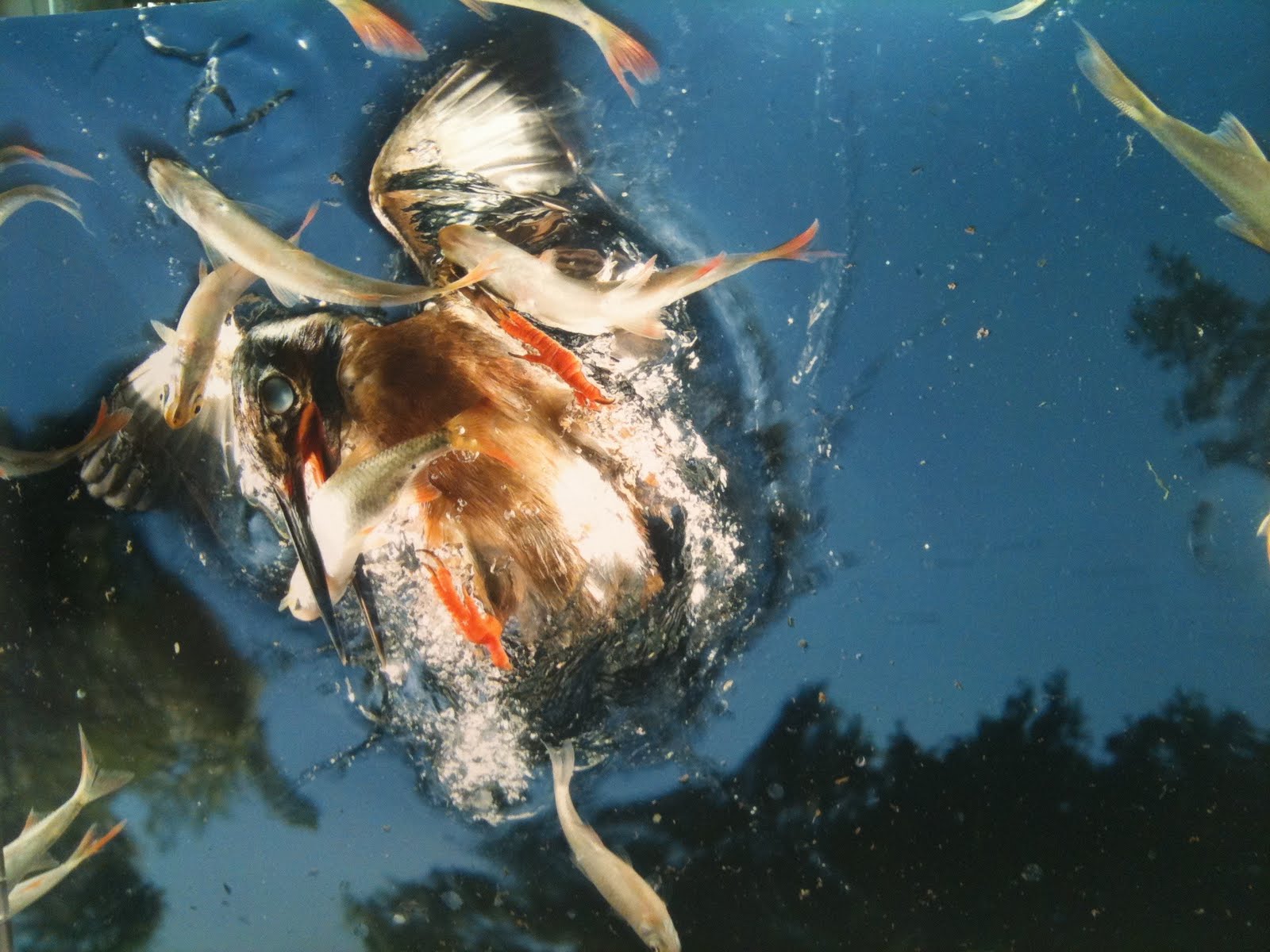
A toddler's head poking from rubble. A swordfish's dive. Iran. Chemically-altered oranges. Obama. A man being stoned to death.

From April 23 till June 20th, these images and more are at World Press Photo 2010 in Amsterdam. This is how the pros do it. Aside from giving many of us amateurs a real sense of photographic inferiority, the tour provides an amazing look at what is going on in all corners of the world.

Here in the 020, the added backdrop of the Oude Kerk (Old Church) in the city center made for a memorable day. It's certainly not for the faint-hearted, and much of what you see will likely stay with you for a long time.

The good news is that the tour goes all year, all around the world, from Split to Santiago and San Fran to Japan. The complete schedule can be seen here. If it shows up in your city, I would highly recommend seeing the exhibition.

Below are images from the visit, including some photos of the photos. I left out a number of the harshest images, thinking that people should go see them voluntarily if they so choose.


We Don't Need Another Giro

5.12.2010


The air smells of a curious mixture of lycra, pasta, and performance-enhancing drugs. That can only mean one thing: The Giro d'Italia is in town, cycling through Amsterdam for the weekend before heading off to Utrecht and then eventually to the motherland.

From what I can tell, this poor man's Tour de France is a big deal to many European sports fans as city officials in Amsterdam estimated up to 500,000 visitors came for the weekend to watch a few hundred international riders compete for the maglia rosa, the pink jersey. And it did knock soccer, the only other televised sport here, off the headlines for a few days. But its appeal escapes me.

It was admittedly mildly impressive to watch these juiced-up cycle jockeys whiz through the streets at up to 50km/h, with zero room for error between harrowing turns and rabid fans.

Amsterdam May 8, 2010

But it all seemed way too much like a video game - with bikes that are so technologically enhanced that they hardly resemble bikes, helmets inspired by the movie Alien, a team car that trails each rider with instructions and encouragement (and presumably syringes), and calves and thighs so technologically enhanced that they hardly resemble calves and thighs.

Hopefully World Cup fever next month will make up for it all, as I privately lament the absence of the NHL and NBA playoffs in the meantime.

Till then, er, yay cycling robots!


Bevrijdingsdag 2

5.10.2010


A really profound day.

May 5th in Holland. Every year, dozens of cities throughout the country honour the freedom that became official on May 5, 1945 as Allied forces liberated the country.

In particular, Canadian soldiers played the primary role in the months and days leading up to the liberation (although Britain, the US, and a number of other countries' soldiers also sacrificed immensely). Also honoured on this day are veterans and peacekeepers from all wars since WWI - some are seen below.

It's just unreal how the Dutch pass this gratitude on to the next generations - kids are taught early on in school just what happened, and to this day Dutch families tend to the gravesites of soldiers who died here. I doubt there are any countries that do a better job of expressing gratitude and educating their kids about what happened in those dark years.

I saw it firsthand in the town of Wageningen, about an hour's drive from Amsterdam, where a parade lasting over two hours took place and where the Hotel de Wereld sits. It was here that the terms of surrender were negotiated and signed on May 6th 1945 between the Germans and Canadian General Charles Foulkes.


General Foulkes and the official surrender, May 6 1945

My parents were aged 11 and 8 at the time that the war ended. They had endured the bombardment of Rotterdam and a life under years of war that I couldn't imagine. They still don't talk about it much, but I often remember this very fact when I feel like complaining about something. I have heard some of what they had to endure, from my grandfather being taken away for 3 years to eating tulip bulbs, and it's an instant reality check.

So this day felt intensely personal - aside from the dual connection to the Netherlands and Canada, I have often asked myself the uncomfortable question: Who knows, with a bomb placed elsewhere or with a later liberation date, what might have happened to my own parents and ultimately to my own existence? Dude.

To see these 80- and 90-year-olds still marching and hearing the roar of the the crowd as they passed by, I felt fiercely patriotic about the Canadian involvement and deeply humbled, almost embarrassed at the same time. After all, I had nothing to do with the heroism of those years and I feel a lot like an undeserving beneficiary of the goodwill that the Dutch still show towards Canadians today.

Back in Canada and the Allied countries, we rarely get to feel just the immense impact that the soldiers actions had on an entire country. Hopefully this post and these pictures illustrate some small part of it.

(For another review of this special day, please click here)


Bevrijdingsdag

5.06.2010


Every year, the Dutch commemorate those who died and those who fought for, defended, and eventually liberated Holland.

May 4th is the evening of rememberance, with ceremonies throughout the country and a 2-minute silent reflection at 8pm. May 5th is a national holiday where the freedom that occurred 65 years ago is celebrated, with events throughout the country. I will cover this in a subsequent posting.

On the evening of May 4th, I decided to take in the Queen's laying of the wreath and other ceremonies at Dam Square in Amsterdam, where we unfortunately were reminded in this post-9/11 world that our notions of freedom, while infinitely better than 65-70 years ago, are not what they once were.

The ceremony on this evening was appropriately solemn, with a few thousand people gathered around the square, watching on large screens a very nice reading of a post-war letter from a survivor. This reading took place indoors, where the Dutch royal family and veterans and other dignitaries held a ceremony before coming outside to lay the wreath and continue to ceremony.

At 8:00pm, everyone stopped. The entire country stops - on the road, in bars, at home, at work. To hear the normal din of Amsterdam's central hub suddenly contrasted with absolute silence was unbelievable, and awesome.

Roughly 90 seconds into the 2-minute reflection though, an incoherent and extremely loud scream came from a man in the crowd about 50m to my right. Seconds later, screams followed as the crowd scattered and a wave of people falling and running and tripping over each other came my way. I didn't know, for a few seconds, if the people falling were being shot. People were falling on the back of my legs. No one knew what was happening. But a number of us stayed on our feet and after 20 seconds or so, the hysteria stopped.

Click here for the Video link

An announcement came a minute later, telling everyone that a man had become "unwell" but that the ceremony would continue. But it was impossible to concentrate as everyone was rattled and the energy was palpably tense.

It's tough to describe how jarring it is to see women your mom's age bleeding from the head, or girls the age of your niece limping and sobbing uncontrollably. In all, over 50 people were injured, all released from hospital that same night with broken bones and bumps on the head.

The crowd was obviously on edge after last year's tragedy in Appeldoorn, where 7 people were killed at another ceremony involving the royal family by a crazed driver. This same situation was equally inexplicable - the man was known to police, and was apparently just trying to incite panic.

There's not one way to wrap the incident up neatly - obviously, the very people being honoured that night had seen horrors a thousand times that size and as such the incident may seem very minor. At the same time, in today's world where bombings occur not just in remote military outposts, Pakistan, or in the Middle East, but in London and Madrid as well, and where we have instant visual access to worldwide atrocities and horror stories at our fingertips, most of us ordinary citizens have involuntary access to a bundle of nerves within ourselves that wasn't there before 9/11.

Even if, as was the case here, the incident had no terrorist implications at all, we feel the connection, we can identify so quickly with the panic and our minds can too easily make the correlation to other incidents of real terror.

I don't want to overstate the event. Everyone is now fine and it didn't register as even a blip on the world radar as far as what many people live with on a daily basis.

But it still feels as though the volume has been turned up in the past 9 years, and too many world leaders, fundamentalist zealots of all colours, and bargain-basement sh*t disturbers are all too happy to not turn it down.